

Long before the first Baby Boomer turned 65 in 2010, residential developers could look over the horizon at a tidal wave of demand for housing that suited Boomers as they aged. This impending surge in demand helped drive a boom in conventional senior living – think independent living and assisted living apartment buildings – in the 1990s. But, a number of unexpected factors, including the Great Recession, drove the market for senior housing in a different direction.

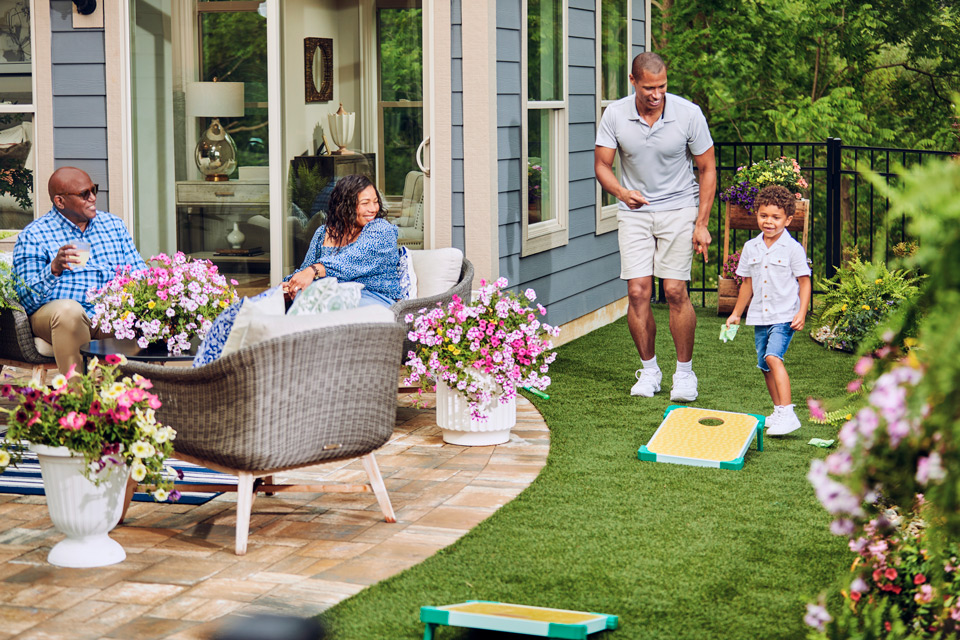
In response to the better health and longer life spans of the Boomer generation, creative builders developed communities that met the needs of empty nesters looking to shed the responsibilities of owning the family home but not move into an “old folks’ home.” For the most part, that meant smaller, more efficient floor plans, higher density, and little or no maintenance.
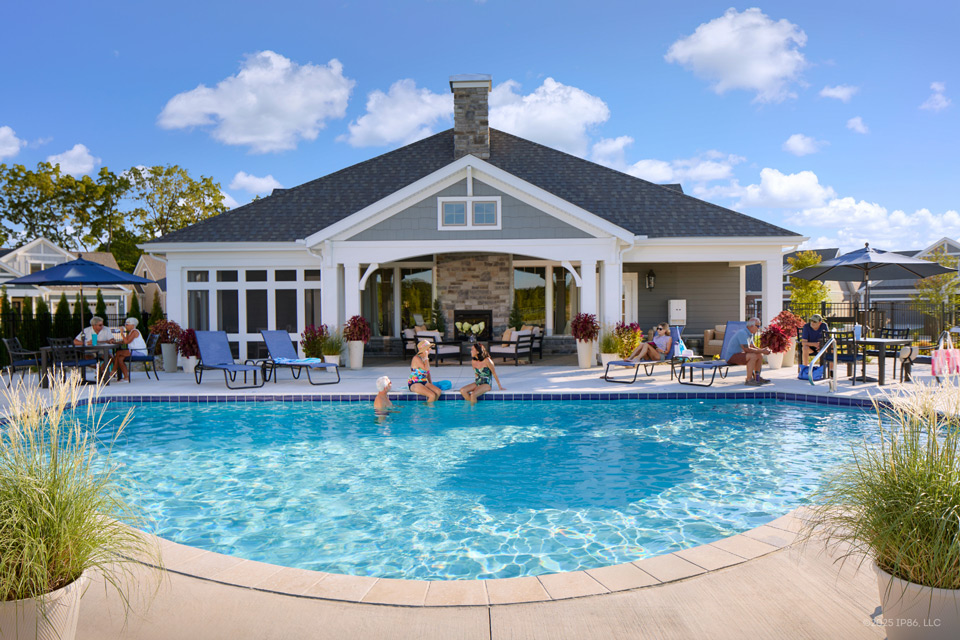
For the past 30 years, a cottage industry within homebuilding has emerged to supply empty nester. As this industry sector matured and served tens of millions of buyers from the so-called Greatest Generation and Baby Boomers, the type of home being offered has evolved. Now, in the latter half of the 2020s, low-maintenance communities are no longer cookie-cutter developments. Retirees have stayed healthier longer than previous generations, and medicine has responded to many ailments that slowed older people with therapies that allow for more activity well into elder life. Developers have responded with communities and home designs that anticipate a more active senior lifestyle.
While there are a handful of trends that suggest low-maintenance and 55-plus housing are changing in the U.S., in Pittsburgh the prevailing trends seem to be unchanging. That does not mean builders are not being creative in going to market, but there is a predictability of the empty-nester market in Pittsburgh.
Big Picture Trends
While low-maintenance living has appeal across a broad spectrum of the population, there are several factors – demographics, personal finances, and design focus – that make this category of housing almost exclusively for empty nesters and retirees. For that reason, the trends in low-maintenance housing are resulting from trends in the 55-plus population.
Very little has changed in the macroeconomic trends that have driven low-maintenance living. The demographic wave may have crested but Baby Boomers will still be turning 65 until 2030. Moreover, Baby Boomers (and much of the generation that preceded them) have remained in their homes much longer than expected. That is likely to create a backlog of pent-up demand for low-maintenance living that will continue for another decade. Boomers have created more wealth than previous generations, allowing them to afford better housing solutions as they age or to own homes in two or more locations.
The demographics in Western PA are consistent with the national trends, but more extreme. While 17% of the United States population is over 65, that share of the population in Pittsburgh’s seven-county metropolitan area (MSA) is 22.5%. Pittsburgh has the oldest median age, 42.8, of any of the 43 U.S. metros with more than one million people, edging out even the Tampa and Miami metros that are known retirement destinations. That’s a fundamentally different source of demand than Sun Belt metros, where growth in the 55+ population is driven by in-migration rather than a long-standing structural feature of the local population.
Another distinction of the Pittsburgh market is the tendency of the older residents to age in place. Hoddy Hanna, chairman of Howard Hanna Real Estate Services, notes that length of time Pittsburgh residents remain in a home has doubled since the Great Recession, in large part due to the fact that older homeowners are remaining in their family homes roughly 10 years longer than in previous generations.
An overarching trend that is consistent nationwide and region-wide is the imbalance between supply and demand for low-maintenance living. Across the U.S., occupancy for all 55-plus housing types, including independent living apartments, has risen for 19 consecutive quarters through mid-2026, reaching 89.5% in the most recent study. That is a function of slowing construction of new apartment units because of higher construction and borrowing costs, but the dynamics for 55-plus “active adult” for-sale communities are equally supply constrained. Data from the first quarter of 2026 showed that occupancy in communities that had been open for at least two years was above 96%.
There is an emerging trend of younger adults — mostly in their late 30s, 40s, and early 50s —that are moving into 55-plus communities before they’re technically eligible or before they’ve reached retirement age. While the lifestyle is part of the appeal, particularly to younger professionals without children, this shift is driven by the fact that 55-plus communities often offer smaller, more affordable homes. Little data exists to judge how much of the low-maintenance market is shifting to younger adults; and there is virtually no anecdotal evidence that this trend is showing up in Pittsburgh.
Another trend tied to affordability is the increase in 55-plus housing for rent. There is some evidence that developers in some of the faster-growing markets are earmarking a portion of their portfolios as rental properties, but little or no evidence that it is becoming a trend in Pittsburgh. One of the larger 55-plus housing builders in the U.S. is skeptical about the economic durability of developing for rent.
“Renting has been discussed over the years. Some of our builders have talked about doing rental-only communities to address the affordability concerns. But there has been no one that I am aware of that is pulled the trigger on such a community,” says Rob Krohn, vice president of marketing at Epcon Homes in Columbus. “Build-to-rent seems better suited for the first-time buyer than our target market.”
Buyers of low-maintenance homes are generally not as concerned about affordability as younger buyers. The share of empty nester buyers that buy without a mortgage can be as high as 75% in many communities. That share tends to diminish in times of a more attractive interest rate environment for investing, not because the buyers need to borrow.
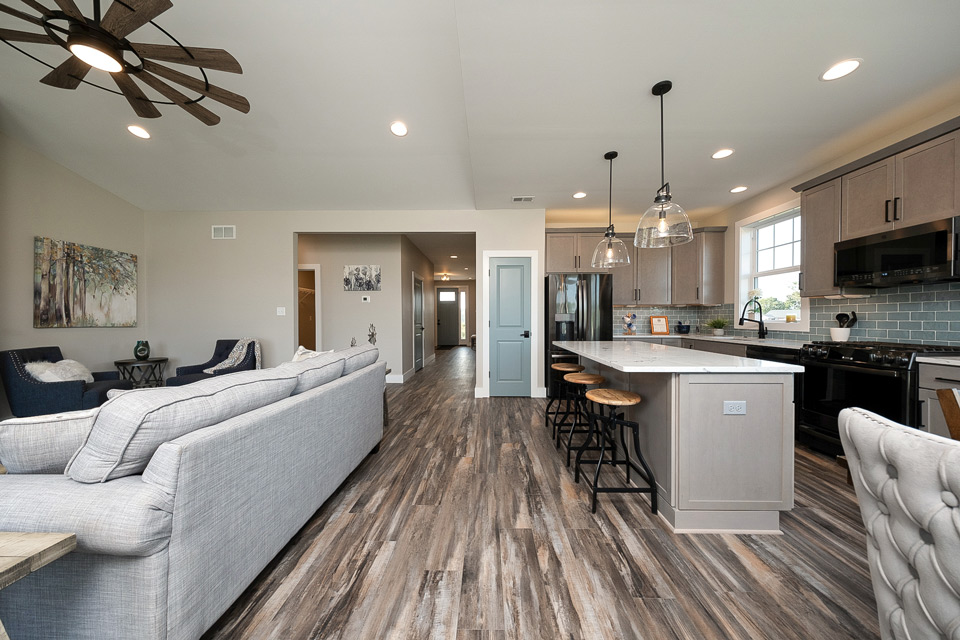
What the demographic, supply, and financial health trends created by the 2020s was a more discriminating buyer and a more diverse supply of builders for the low-maintenance homeowner. The broader range of builders resulted in a broader range of home designs. Low-maintenance homes were, until recently, smaller and more cookie-cutter in design. Today, the sweet spot for empty-nester homes is above 1,800 square feet. Builders offer as many floor plans above 2,000 square feet as below that mark, and options for third bedrooms, additional living space – both indoor and outdoor – and home offices. Buyers are increasingly looking for kitchens and master bathrooms that approximate what they had in their family home, both in size and finish quality.
As the 55-plus lifestyle community has matured over the past 20-to-30 years, buyers – especially retirees – have seen the market split into two main types of communities. Krohn jokingly refers to the choice as similar to choosing between a “bed-and-breakfast or a cruise ship.” The cruise ship analogy aptly describes the massive retirement communities that have boomed as Baby Boomers have retired, places like Margaritaville, which has 3,500 homes in each of its locations, and The Villages with its 70,000-plus homes. In contrast, the “bed-and-breakfast” is the neighborhood of 50 to 150 lots that is developed on infill properties in the communities where people already live, work, and play.
The latter accurately describes the low-maintenance communities that have been and will be developed in metropolitan Pittsburgh.
How the Trends are Playing Out in Pittsburgh
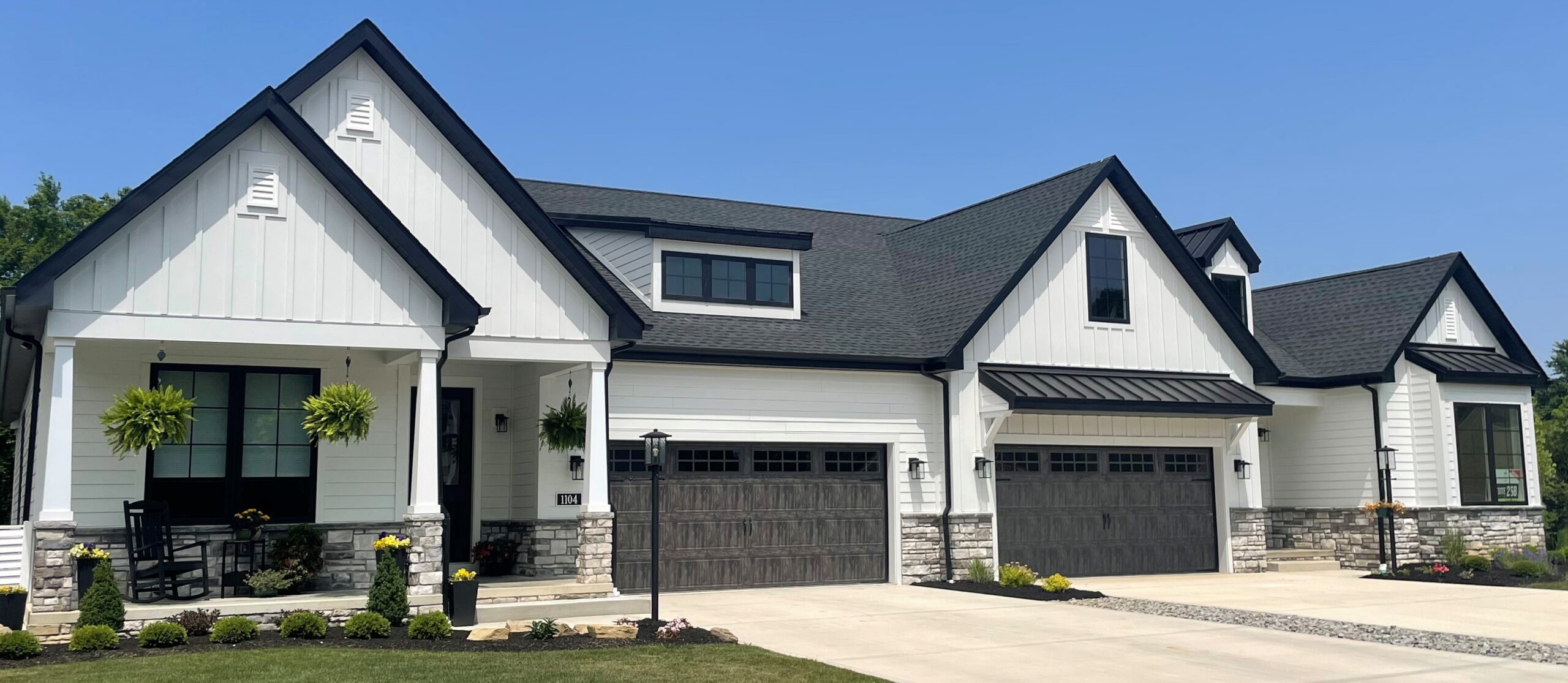
The low-maintenance buyer in Pittsburgh is making a choice to live in a community of people that are in similar life circumstances. They are choosing to live in a neighborhood that is part of a local community that is similar to – if not the same as – the community where they raised a family or lived in a larger home. Beyond this basic reality, that they will not be living in a “cruise ship” community, the impact in the Pittsburgh market of trends in low-maintenance living elsewhere will depend on three basic fundamentals: demographics, mismatched housing stock, and challenging conditions for new construction.
As discussed above, Pittsburgh’s demographics are more favorable for empty nester housing demand, but its location and lack of population growth are headwinds for development of new homes. While there has been some favorable press about the suitability of living in Pittsburgh post-retirement, the facts show the climate in Western PA continues to promote out-migration at retirement. And absent any sustainable domestic migration into the Pittsburgh area, the number of empty nesters is going to peak and decline as the Boomers age out.
The counterbalance to that limitation on demand is the mismatch of existing housing stock to the needs of the empty nester. Unlike in major Sun Belt cities, where empty nesters have been moving in great numbers for decades, there is not a plentiful stock of existing homes suited to the needs of empty nester homeowners. What exists is largely a function of the uptick in development of that property style over the past 20 years, much of which is still being occupied by the first generation of owners.
In most marketplace situations, a sector that had strong demographic demand and a shortage of supply would be seen as an opportunity to be seized. While that has been true to some extent, and more builders are turning their efforts to building more homes for empty-nesters, the environment in which developers and builders must operate in Western PA is hardly supportive of new construction.
Developers face several strong headwinds slowing the construction of new communities. Some of those are unavoidable, such as the scarcity of available land and the topography of the region. A mature region, Western PA has far fewer acres in desirable locations for residential development. Moreover, the competition from the natural gas industry that surged since 2007 resulted in skyrocketing land prices. After roughly 100 years of suburban development, most of the land that exists for new communities is steeply sloped, resulting in much higher costs for excavation, grading, and stormwater management.
Compounding these natural headwinds are regulatory burdens and oversight that add further to the costs and schedule required to bring a development into the marketplace.
The Commonwealth of Pennsylvania is one of the stricter regulators of new construction, especially in contrast to the regulatory environment in Ohio and West Virginia. This tighter regulatory regime is especially strict in the area of environmental approvals. Over the years, what is considered best management practice for stormwater has become increasingly more expensive, often applying regulations meant for the worst sites or large-scale commercial development to residential development. The commonwealth’s Department of Environmental Protection (DEP) has become a source of frustration for its slow review of new developments and its tendency to heap additional requirements on projects as they move through the review process. These additional requirements are frequently not applied early in the process and are often the individual reviewer’s interpretation of regulations. Developers say that it is routine to have one reviewer apply a regulation differently than another for projects located in the same municipality.
Paul Scarmzzi, CEO of Scarmazzi Homes, says there are a host of factors pushing costs up, but zeroes in on the expanded regulatory process as a factor that could be improved.
“It’s a combination of factors. Obviously, there’s inflation but it’s regulations that have changed the most. There are new rules. You get new comments mid project that move the goal post,” he says. “We’re not making a better house or moving the needle on the environment because of the increased regulation, but they are driving up costs. The cost that goes into stormwater planning is out of control. My engineers always complain that the additional regulations don’t make a difference in improving the environment, but there are regulators who sit there and check boxes.”
Developers tend to find more consistency at an individual municipal level; however, that consistency does not necessarily apply from one municipality to another. And, with hundreds of municipalities issuing building permits within the seven-county MSA, developers often face different conditions for communities proposed just a few miles apart. This has been especially true as development has pushed further into areas that have seen little development until the past 10 or 20 years.
The net result of the prevailing regulatory environment is less certainty and higher cost to develop. Residential developers estimate that the gestation period for a new community is at least two years and often three years. That means paying property owners, engineers, and lenders hundreds of thousands before the first shovel goes into the ground. Developers say that has increased lot costs by between $50,000 and $100,000. John Hobart Miller, a fourth-generation custom builder, estimates that the cost of stormwater management alone in Fox Chapel is $100,000.
Regardless of the regulatory environment, there is also the challenge presented by the land itself, especially in the more attractive, well-developed areas.
“They’re not making any more land. Between utility capacity, sewers, and mining, it’s tough to find a good piece of ground. You take land that you would never have looked at 10 years ago and make it work,” explains Scarmazzi. “The other thing is the time it takes to get to the market is so much longer. We used to plan for a year to get a project approved now we budget two to three years. Our Silver Creek project, that’s just getting underway, took four.”
One trend that has been less obvious as demand for low-maintenance housing has grown is how builders have responded. Aside from the occasional marketing campaign and the growing market share of builders dedicated to empty nester home construction, it is hard to judge how many units of this type are started each year until you get into the weeds a bit.
Since 2020, there have been just shy of 20,000 new single-family homes started in the six-county Pittsburgh metro area. Of that total, 1,655 homes or 8.5% were built by the three firms, Scarmazzi Homes, Traditions of America, and Weaver Homes, that have a low-maintenance-only approach to homebuilding. That would be somewhere between 4% and 8% fewer homes than the demographics of Western PA would suggest are needed. But this outsized demand – perhaps combined with the decline in demand from first-time and move-up buyers – caused many other homebuilders to shift their focus.
“About 95% of our homes are a low-maintenance, empty-nester product. North Meadow at Washington Township for sure, as well as the Hillstone community in Murrysville, and the new Reserve at Foxfield community in Hempfield Township,” explains Jason Korna, vice president, residential division at Kacin Companies. “The latter will be almost certainly at 100% empty nester. We focus on one floor living or at least first floor master bedrooms.”
Korna notes that none of these communities are marketed as empty-nester homes only per se, but the lifestyle and home designs are strongly appealing to that type of buyer.
“Most, if not all, of my buyers are coming from a home that they lived in from between 20 to 40 years. They’re making the decision to move while they can still make that decision, so they can age in place,” Korna says. “In general, they’re looking for high quality, low-maintenance finishes, both interior and exterior. They still want bells and whistles. They want to ‘right size’. They want a smaller footprint but one that is more usable.”
“Liberty Pointe is not age restricted to over 55, but the homes are designed for that buyer. So, they are all single-floor living, maintenance free,” says Shaun Seydor, president of Pitell Homes. “That tends to attract the 55-plus buyers, either moving down or as a part-time Pittsburgh, part-time Florida type of living.”
Pitell Homes, which developed the first, low-maintenance phase of Leslie Farms in Connoquenessing and completed The Plantations community outside Saxonburg, PA, is currently developing Liberty Pointe in Jefferson Township. The community of quadplexes, located just outside Saxonburg off Constitution Avenue, was begun in 2023. To date, 32 homes have started or been completed, with four more to be built in the first phase. Additional phases will bring another 72 homes.
It is worth noting that both Kacin and Pitell Homes were founded as custom homebuilders and were completing custom home communities in Oakmont and Ross Township respectively during this same period. The same kind of business model migration has occurred for Foxlane Homes, which is based in Fort Washington, PA, but has built nearly 300 homes since opening an office in McCandless in 2021. Foxlane built its first homes in custom communities in areas like Hampton Township, Sewickley, Murrysville, Peters Township, and Upper St. Clair. Now, three of Foxlane’s five active neighborhoods are geared to empty-nesters, including the soon-to-open Paige Pointe in Jackson Township just south of Zelienople.
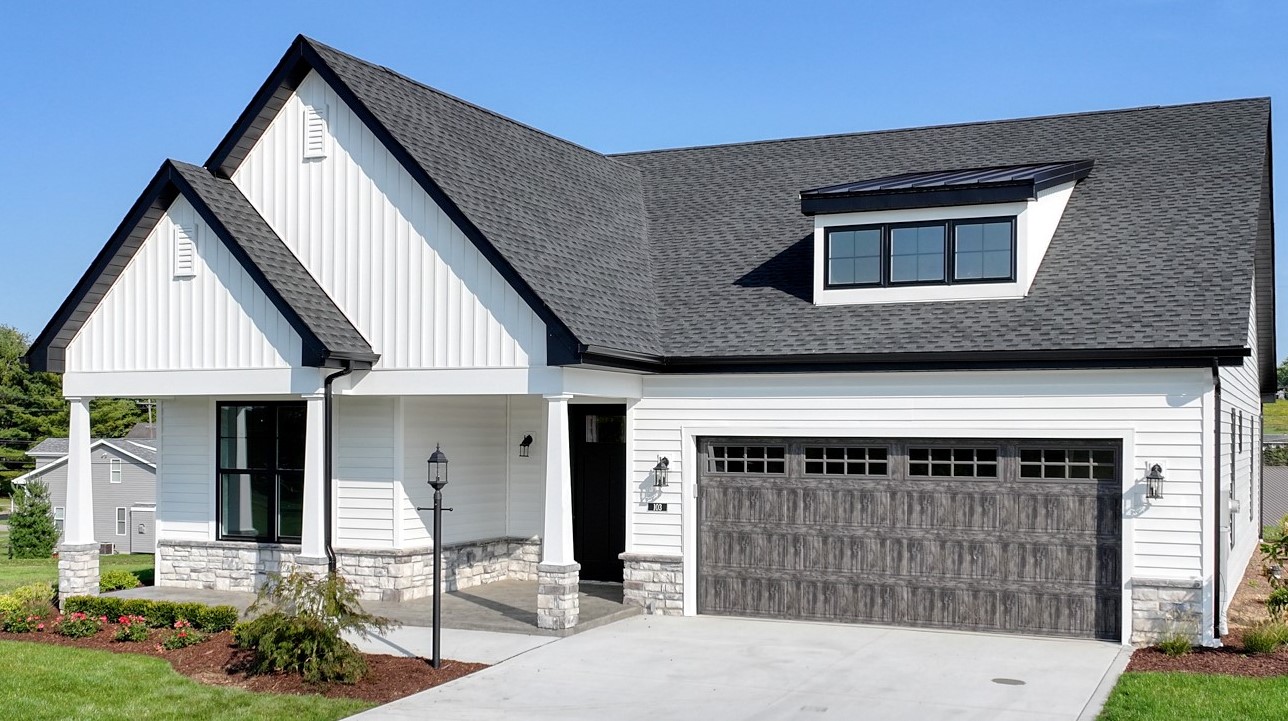
The increased focus on low-maintenance homes is not limited to smaller or mid-sized builders.
“That product makes up 40% of my business right now. The empty-nester community we don’t limit to 55 and older exclusively, but we have a ranch product where 95% of buyers fit that demographic,” reports Matt Rost, regional market manager for NVR Inc., Pittsburgh’s largest homebuilder under the Ryan Homes and Heartland Custom Homes brands. “It’s probably been our best Market segment for a number of years. We have those communities spread out in all four corners of this market. And they are all producing very well.”
Rost points to the Glade Run neighborhood in Zelienople as an example of how robust the low-maintenance market is. Totaling nearly 500 homes, Glade Run is a mixture of townhomes, single-family homes, and empty-nester home designs, with only the latter including maintenance by the property manager. The empty-nester product in Glade Run is priced between $400,000 and $500,000, with the opportunity to upgrade finishes and amenities to roughly $575,000.
“The empty-nester section has four or five sales every month without the same prospecting effort that we need for the other product types. The salesperson for that part of the community has 10 to 15 sales appointments scheduled all the time,” Rost says.
“Next year we expect to have more of those communities coming, including townhouses that are aimed at empty nesters looking for a low-maintenance homes around 2,100 square feet priced closer to $400,000.”
Ryan Homes starts around 800 homes annually in the Pittsburgh market. Using Rost’s estimate of the low-maintenance share of that volume, Ryan Homes delivers more than 300 empty-nester homes into the marketplace, or roughly 10 percent of the 3,000 new homes built for sale in an average year in Pittsburgh. Even without a significant share of low-maintenance homes offered by Pittsburgh’s second and third largest builders, Maronda Homes and D.R. Horton, roughly one in five homes started each year in Allegheny, Beaver, Butler, Washington, and Westmoreland counties is built specifically for an empty nester.
Thus far, the trend of younger buyers for low-maintenance homes has not appeared. While the empty-nester builders have noted that the lifestyle has always attracted a few young professionals, the product offered in Pittsburgh is not generally more affordable than other options. And there are other factors that would limit the appeal of low-maintenance communities to younger adults and families.
Aside from having less in common with most of their neighbors, young people will find the smaller lot sizes less accommodating for children. Floor plans tailored for empty nesters are often short on storage space, a problem for young families that are in the accumulative stage of life.
“We will get the occasional interest from a young couple or family. If there is interest, it’s generally in an area where other builders aren’t building, they like the area, they want a new house and are attracted to the idea of not having to do any maintenance,” notes Rost. “Usually that’s going to be young professionals, not young families.”
So, if a low-maintenance home is being built in the Pittsburgh market, it is almost certainly for an empty-nester. The trends in what that buyer wants in a low-maintenance home have shifted as the target buyer has evolved from being one of the Greatest Generation to a Baby Boomer.
For that first generation of empty-nester buyers that popped up in the late 1980s and 1990s, the attraction of the product was in its freedom from home maintenance and in a floor plan that was optimized for downsizing. That meant homes that were 1,400 square feet to 1,800 square feet, with no more than two bedrooms and an open but relatively compact floor plan. Baby Boomers have driven the boom in empty-nester housing in all markets, not just the Sun Belt, and have raised expectations for how those homes should be designed.
Today’s empty-nester home is more likely to have three bedrooms, a second floor, multiple living areas and/or a home office/study, and finishes that more closely resemble the custom home that the Boomer buyer is leaving. Most builders still offer compact floor plans, but the lion’s share of what is built starts at 1,800 square feet and is frequently larger. Baby Boomer empty nesters are looking to “right size,” which may or may not mean a home that is smaller than the one in which they raised a family.
“Mostly buyers are still into open floor plans. We build a product that is very customizable. We can move rooms or redesign a custom floor plan,” says Korna. “More of our buyers are really into nice outdoor living spaces with large, covered patios, three- or four-season rooms, and outdoor fireplaces.”
For builders like Kacin, such customization means upscale pricing. For most builders pursuing the empty-nester buyer, the approach has been to design a core group of floor plans and options that meet the higher demands of Baby Boomers while maintaining a predictable cost structure. In the broader marketplace, buyers tend to understand that a floor plan that is easily repeated will cost less, while a custom home will carry a higher price. The evidence suggests that empty nesters have higher expectations.
“Everywhere people live, they want to live better. We have lots of ‘baby chasers’ who are moving to where their grandkids are,” Krohn says. “People want to live near their families, friends, restaurants, and medical facilities that they are comfortable with. Maybe their home does not fit their lifestyle anymore, but they don’t want to leave where they have built their life.”
For the most part, the expectations of buyers and builders of low-maintenance communities have been evolving together over the past few decades. The homes built by early developers of empty-nest communities, like Scarmazzi Homes and Weaver Homes, are very different from those they build today; however, today’s home is the result of incremental changes over a long period of time. While low-maintenance housing will continue to evolve, the category is trending towards maturity and the basic needs of the empty nester have not changed so radically.
“I haven’t seen anything jump out that’s a new trend. There may be some subtle things, but nothing jumps out that everyone suddenly wants,” says Scarmazzi.
“I’m not really seeing any change in trends. There may be things that change with design, but the empty nester buyer wants that low-stress lifestyle,” says Korna. “I know it’s cliche, but they want to literally lock the door and leave, whether it’s to go on vacation or to visit kids and grandkids.” NH