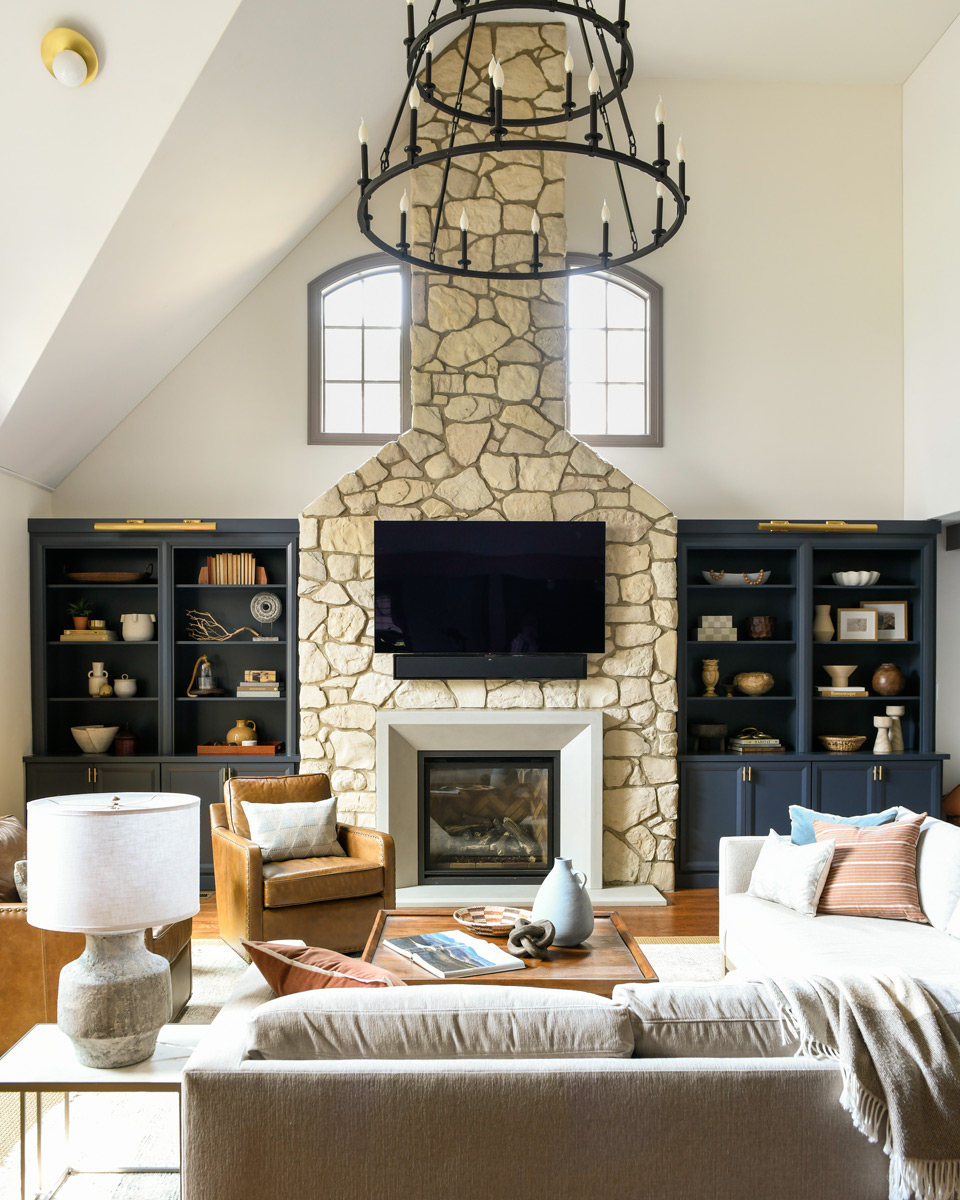
In Western Pennsylvania’s new home market, the latest design trends are moving beyond simply making a house look beautiful.
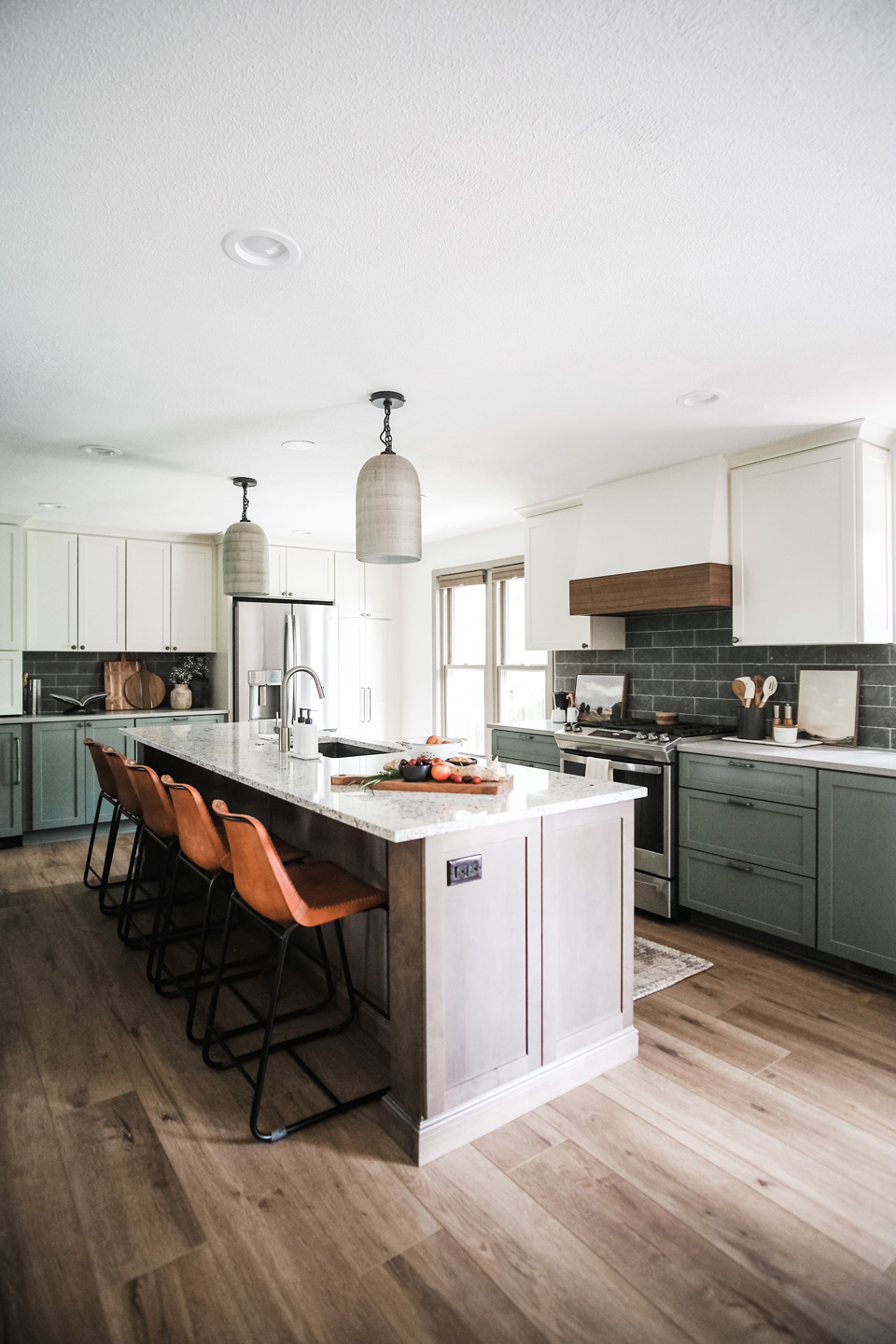
They are about creating spaces focused on being comfortable, functional, and distinctly personal. From warm, natural materials and earthy color palettes to flexible living spaces, statement kitchens, and technology seamlessly integrated into the home, today’s Pittsburgh-area builders and homeowners are embracing interiors that balance modern style with everyday livability. As new communities continue to take shape across the region, interior design is becoming an important part of what makes a new home feel less like a blank slate and more like a place buyers can truly call their own.
Bethany Williard, a Pittsburgh native and the owner and principal designer of Studio 1049, has witnessed the evolution of numerous interior design styles. The biggest shift she has noticed is that people are embracing color and their own personality again. “For a few years, everything was neutral and grey, and homes started to look the same,” says Williard. “I think the way we think about home has fundamentally changed. We all spend so much time inside our own four walls it ultimately forces us to really look at our surroundings and consider how our environment affects us day to day. Once you notice that, it’s hard to settle for a house that doesn’t feel like you.”
Willard also believes clients are braver now and are willing to try color and pattern. Instead of taking their homes so seriously, homeowners are layering their interiors with small, detailed touches they genuinely love rather than designing for resale or for someone else’s approval.
Interior design trends come and go, but some have staying power while others leave homeowners wondering what they were thinking when they made their design choices. Today’s trends that are expected to stick around for a while include the return of warm wood in kitchens. “The all-white kitchen had a strong reign for a few years, but I think that was really a revolt against the dark cherry kitchens of the late nineties and early 2000’s,” says Willard. “Then everyone’s kitchen started to feel sterile and lack personality, so the pendulum swung again. Now we’re seeing multiple cabinet finishes used together, usually one painted color and one stained wood, and that feels like it has real legs. Organic, handmade materials are the same story. They bring in warmth and character in a way a perfectly uniform material never will. Natural stone in a honed or matte finish is here to stay. And with tile, people are having fun with pattern formations and grout thickness, which is a low-risk way to add personality.”
There’s a common belief in the local design community that Pittsburgh runs a little behind on trends, that what’s happening elsewhere takes longer to trickle into Western Pennsylvania. Williard believes there are pros and cons to that. “Sometimes it’s harder to get a client to see a vision when it looks very different from what they’re used to. But it’s also genuinely fun to be part of bringing something new to the community, and, honestly, moving more slowly means we skip a lot of trends that don’t deserve to stick.” Williard also notes that clients tend to want things done once and done well, rather than refreshed every five years. “That’s very Western Pennsylvania, and it’s honestly my favorite thing about working here. It means the work becomes thoughtful and lasts.”
The Impact of Lifestyle Changes in Interior Design
Throughout the country, people are moving away from traditional living and dining rooms that rarely get used. “If a client has the square footage to keep them, we still see those rooms used as intended. But when space is tight, I’m converting dining rooms into home offices or second living spaces pretty regularly,” says Williard. “Peoples’ lives have changed. Families are busy, and it’s rare for everyone to sit down at a dining table every night. People are also more casual now, so a formal dining room ends up being a beautiful room nobody walks into. Or, more often, it quietly becomes the catch-all for family life. The mail pile, the homework, the laundry waiting to be folded, the packages nobody has opened. If a room is going to end up holding all of that anyway, I’d rather design it to actually work for the family.”
That said, Williard does think families are being more intentional about the time they do spend together, which is why game rooms and movie rooms are on the rise. Those spaces earn their square footage because people actually use them. Home gyms are here to stay too, whether that’s a corner of the basement or a spare room doing double duty. People want the option to work out without leaving the house. “Now, I’ll be honest, I think some of these home gyms see a lot less action than their owners imagined. But there’s something to having it there. Even clients with a gym membership like knowing the option exists ten steps away. Sometimes the intention is the first step,” notes Williard.
The Social Media Impact on Interior Design Choices
Social media is a major driver in the interior design choices homeowners make for their homes. Homeowners now have endless inspiration at their fingertips, and with designers and do it yourself accounts regularly appearing in their feeds, they are seeing what is possible and how a home can be personalized at almost any budget.
However, relying on social media for design ideas has downsides. Willard says one trend homeowners may eventually question is the builder-grade “McMansion” with empty, underused space. Many people do not realize how much furniture is needed to properly fill a home of that size, and scale is often where mistakes happen from furniture and rugs to art and accessories that are all slightly too small for the room. Social media can also make it harder to understand what is realistic because enormous homes online can begin to feel like the norm without showing the true cost to build and maintain them.
Another trend often seen on social media is barn doors. Williard believes in staying true to a home’s architecture. “You can absolutely mix in different styles and elements, but when a house diverges too far from what it actually is, that’s usually what dates it. If it isn’t a farmhouse, a barn door starts to feel questionable. There are other space-saving doors that do the same job, and barn doors give you almost no sound privacy. I think we all just got a little barn door happy because it felt different and unique at the time.”
On the positive side, social media has played a role in guiding homeowners toward making their own choices. People are letting their homes be personal again with color, pattern, and vintage pieces that carry a little history. “There’s endless inspiration available now and seeing so many different homes has given people permission to stop chasing one look and start trusting their own taste,” says Williard.
What Homeowners Should Know
Homeowners don’t always understand the interior design process until they are in the middle of a project. One of the big issues that arises is the overall cost. “Unless someone has renovated or built before, they really have no idea of the cost, and even then, it is a question of when,” explains Williard. “A kitchen renovation today can easily cost twice what it did eight or ten years ago. A primary bathroom now costs about as much as a kitchen used to.”
The amount of time involved to accomplish the interior design process surprises many people. A significant amount of input is asked of them that they may not expect. A renovation is not something you hand off. It requires the homeowner to make a lot of decisions consistently over a long stretch of time.
Also, it’s often difficult for the homeowner to articulate what they want. “When I sit down with someone and ask how they want us to use a space, it is often the first time they’ve had to put it into words,” says Williard. “They usually know what isn’t working, and that’s honestly a great place to start. But when it comes to what they do want, many people can’t quite name it, but that’s the job. I’ve been doing this long enough to gather what someone isn’t saying and turn it into a visual direction for the space. Some of the best work comes out of those conversations.”
Williard also believes homeowners should make decisions and selections that they love rather than paying attention to what’s trending or what’s popular. Personal style and preferences will never go out of style. “Not every decision needs to be a showstopper. You need supporting pieces that recede a little so the focal points can shine. Keep coming back to the overall vision and what you’re trying to achieve. When you find yourself trying too hard to make something work, that’s usually the moment to step back and ask whether that piece is helping or hurting the design. It’s okay to let it go and find something that fits the larger puzzle more seamlessly.”
Another tip for homeowners is to invest money into the elements that are expensive to change later like flooring, cabinetry, millwork, and window treatments. Paint, lighting, furnishings, accessories, and even something like a backsplash can be swapped out down the road for far less money. A new backsplash is close to a weekend project, and it changes the feel of a kitchen for a fraction of what new countertops cost.
AI’s Role in Interior Design
AI is becoming a much bigger part of the design conversation. As a designer and business owner, Williard uses AI almost every day, though far more on the back end of her business rather than in the actual design work. “I’m a visual creative person, so I use it to save time on the writing like drafting emails and project status updates. I can brain dump my thoughts into it and it will organize them into something polished and professional, which used to take me a big chunk of the day.”
Williard also uses AI for sourcing. She gives it her parameters regarding vendors, budget, size, quality, and style then asks for five to ten options that fit. She still makes the final selections with AI handling the preliminary legwork. On the design side, she can now produce very high-quality renderings from the 3D models she builds for each project. “The models themselves are still time-consuming, and the renderings used to take hours for a single view. Now I can get the same result in minutes,” says Williard, adding the importance of checking the design as AI is not foolproof.
Overall, Williard believes AI will continue to change the interior design business. “Our industry has been through this before. When the computer and the internet arrived, everything had previously been done by hand: drawing, renderings, orders placed on paper, and phone calls to check the status of everything. Designers, trades, and vendors all had to adapt their processes to stay relevant. There are a few old-school holdouts, but for the most part it make the work easier. I think AI lands in the same place.”
What AI cannot replace is the human element. “It can’t build the relationship we have with a client. It can’t sit in someone’s home and understand how they want to feel in that room,” says Williard. “Some of my best design decisions have come from pulling one unexpected thing out of a conversation, something a client mentioned in passing that had nothing to do with design and finding a way to work it into the space. That’s not a prompt you can write. I think AI makes us faster and frees us up for the creative work. But the judgment, the relationship, and the instinct for how a home should feel are still ours.” NH